
Inheritance Law in Pakistan: Shares, Heirs and Process (Guide)
Written by Muhammad Adeel Chaudhry, Senior Partner
Published
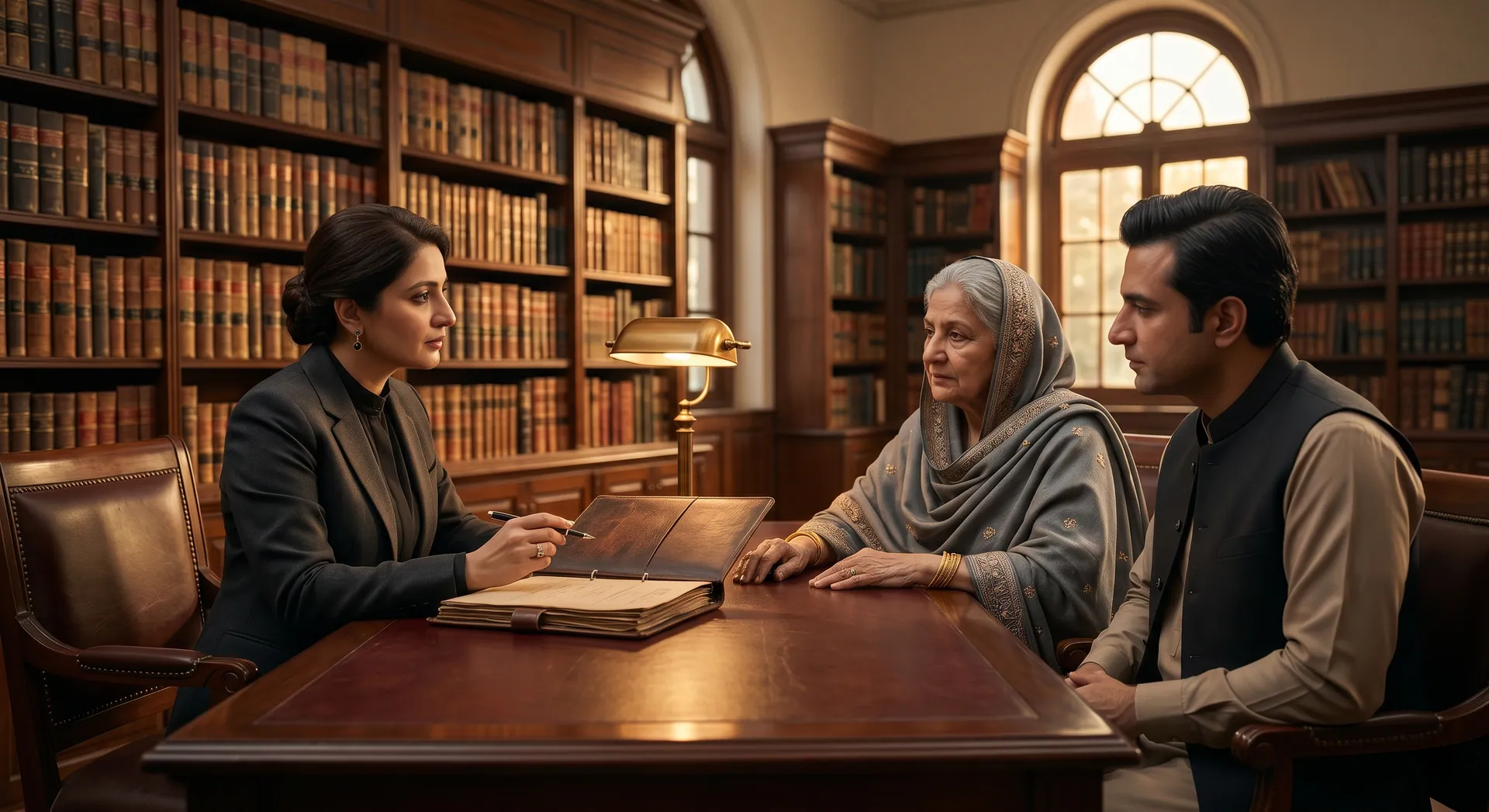
When a person dies, their property passes to their legal heirs according to law, and in Pakistan, getting that distribution right is both a religious and a legal duty. Inheritance for Muslims is governed by Islamic law as applied through the Muslim Personal Law (Shariat) Application Act 1962, with the practical steps handled by the civil courts and the revenue authorities. This guide from Global Law Company explains who inherits, in what shares, and how to actually transfer inherited property anywhere in the country.
Inheritance is one of the few areas of law that touches almost every family, yet it is also one of the most misunderstood. Many disputes arise not from bad faith but from confusion, about who is entitled, in what proportion, and what paperwork is needed to turn a legal right into recorded ownership. Clear advice early prevents years of conflict later.
Who Are the Legal Heirs
On a Muslim's death, the estate passes to heirs recognised by Islamic law. The primary heirs usually include the spouse, children, and parents of the deceased, with other relatives inheriting in defined circumstances. Importantly, inheritance opens automatically on death, heirs become owners of their shares by operation of law, even before any formal transfer is recorded. No heir can simply be "written out" of their lawful share, and any attempt to deny an heir their share can be challenged in court. This automatic vesting is a essential protection, particularly for heirs who are abroad, young, or otherwise not present to assert their rights at the time of death.
Shares of Inheritance
Islamic inheritance allocates fixed shares to certain heirs and divides the remainder among others. For example, a wife's and a husband's shares differ depending on whether there are children; parents take prescribed shares; and sons and daughters inherit in a defined proportion. The exact distribution depends on which heirs survive the deceased, so the shares in any particular estate must be calculated carefully, the presence or absence of a single heir can change everyone's share. We prepare a precise distribution for your family's specific circumstances, which both honours the legal entitlements and prevents disputes later.
Wills and Gifts
Pakistani Muslims can make a will (wasiyat), but the power to do so is limited: ordinarily a Muslim may bequeath up to a defined portion of the estate to non-heirs, while the bulk passes to heirs by the fixed shares. A gift (hiba) made during the donor's lifetime is treated differently from inheritance and must meet its own legal requirements to be valid. People sometimes use gifts to arrange their affairs before death, but a gift made to defeat heirs' rights, or one that does not meet the legal conditions, can be challenged. We advise on what can and cannot lawfully be done.
Succession Certificate and Letters of Administration
The document and forum depend on the asset and the province or territory. NADRA's current succession service distinguishes a succession certificate for movable assets, such as bank balances and securities, from a letter of administration for immovable property. Eligible uncontested applications may proceed through NADRA under the applicable succession law; objections, disputed heirship, minors, or other legal controversies may require the competent court or another prescribed forum. Our succession certificate versus letter of administration guide explains the distinction, documents, and province-specific cautions.
Transferring Inherited Immovable Property (Mutation)
For immovable property such as land and houses, the heirs' shares are recorded by mutation (intiqal) in the revenue record under the Land Revenue Act 1967, updating the official ownership entries (such as the fard) to reflect the heirs. Where co-heirs cannot agree on how to use or divide jointly inherited property, a partition suit divides it by metes and bounds or, where physical division is impractical, by sale and distribution of the proceeds. We handle mutation and partition from start to finish. See our strategic property transfer guide.
When Heirs Are Denied Their Share
Sadly, the most common inheritance problem we see is one heir, often a sister, widow, or absent relative, being denied their lawful share by others in the family. Pakistani law firmly protects an heir's right to their share, and the courts can order the record corrected and the property distributed. Acting promptly matters, because the longer a wrongful possession or an incorrect record stands, the more complicated it can be to unwind. See our framework guide on women's inheritance and property rights.
Inheritance for Overseas Pakistanis
Overseas Pakistanis frequently inherit property at home and find the process daunting from a distance, and, too often, find that relatives have delayed or blocked the recording of their share. The law protects them just as fully as resident heirs, and physical presence is not required to assert a right. Acting under a properly attested power of attorney, we can obtain the succession certificate or letters of administration, complete the mutation of inherited land, and, where necessary, litigate to recover a share that has been withheld. We keep overseas heirs informed throughout, so they can secure what is lawfully theirs without repeated travel.
Why Timely Distribution Matters
Leaving an estate undistributed for years is one of the most common and avoidable causes of family conflict. As time passes, heirs themselves die and their shares pass to a further generation, the number of co-owners multiplies, records fall out of date, and informal occupation hardens into disputed claims. A clean, timely distribution, properly calculated, documented, and recorded, protects every heir and spares the family a tangle that becomes harder to unwind with each passing year. We help families complete the distribution correctly the first time.
Secure Your Inheritance with Global Law Company
Contact Global Law Company, an experienced property lawyer in Pakistan, at 0333 4125951 or email globallawcompany@gmail.com, or visit our central office layout chambers at 3rd Floor, Ahmad and Shafi Plaza, 13 Fane Rd, Lahore, 54000.
Frequently Asked Questions
Who are the legal heirs under inheritance law in Pakistan?
For Muslims, the heirs are determined by Islamic law and typically include the spouse, children, and parents, with other relatives inheriting in defined circumstances.
Can an heir be denied their share of inheritance?
No. Heirs become owners of their shares automatically on death, and the law protects that right. An heir wrongly denied their share can recover it through the courts.
What is a succession certificate?
It authorises collection of a deceased person's movable assets, such as bank balances and securities. Depending on the applicable provincial or territorial law and whether the matter is contested, the process may begin through NADRA or require the competent court.
How is inherited land transferred to heirs?
Through mutation (intiqal) in the revenue record, which updates the official ownership entries to reflect each heir's share. We handle the process.
Can a Muslim leave everything to one person by will?
No. The power to make a will is limited; the bulk of the estate passes to heirs by their fixed shares, with only a defined portion available to bequeath to non-heirs.