
Child Custody Law in Pakistan: Mother and Father Rights (Guide)

Written by Muhammad Adeel Chaudhry, Senior Partner
Published
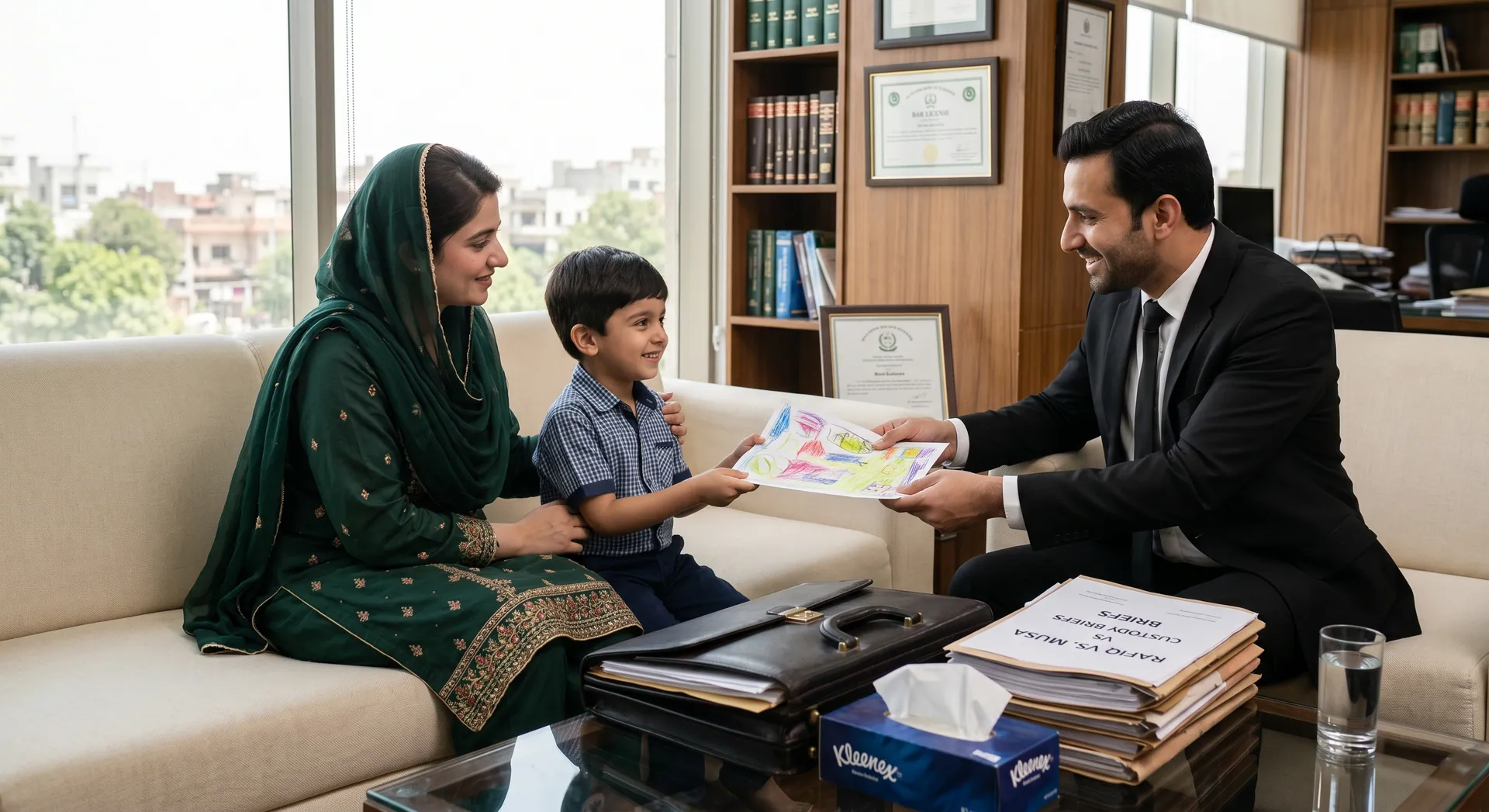
When parents separate, the most painful question is often who the children will live with. Child custody law in Pakistan is governed by the Guardians and Wards Act 1890, applied through the Family Courts, and it turns on one overriding principle: the welfare of the minor. This guide from Global Law Company explains how custody is actually decided across Pakistan, and what mothers and fathers can realistically expect.
Custody disputes are among the hardest cases any family faces, precisely because there is no winner when a child is caught between two parents. The law recognises this by refusing to treat custody as a prize to be awarded to the "better" parent in the abstract. Instead, it asks a narrower and more humane question: in this child's particular circumstances, what arrangement serves the child best?
Custody (Hizanat) Versus Guardianship
Pakistani law distinguishes between custody (hizanat), the physical care and day-to-day upbringing of the child, and guardianship, which concerns the child's person and property in a broader legal sense. A mother is generally entitled to custody of young children, while the father typically remains the natural guardian responsible for financial support. Understanding this distinction is important, because winning custody does not remove the father's duty to maintain the child, and being the natural guardian does not automatically give the father physical custody.
The Welfare of the Minor is Paramount
No rule about custody is absolute. Under the Guardians and Wards Act 1890, the court's guiding consideration is always the welfare of the minor, including the child's age, sex, religion, emotional ties, the character and capacity of each parent, the stability each home offers, and the child's own wishes where the child is old enough to express them. A parent's right gives way wherever the child's welfare requires it. This is why no lawyer can honestly promise a particular outcome at the outset; what we can do is build the strongest possible case that the arrangement you seek is the one that serves your child.
Mother's Custody Rights
Under the personal law applied in Pakistan, a mother is ordinarily entitled to custody of a son during his early years and of a daughter until she reaches puberty, provided this serves the child's welfare. This right can be affected by circumstances such as remarriage to a person not related to the child within the prohibited degrees, but even then the welfare principle controls the final decision rather than any automatic rule. Courts increasingly recognise the importance of the mother's role in a young child's life, and a mother seeking custody is on strong ground where she can show a stable, caring home.
Father's Rights and Role
The father is the natural guardian and is responsible for the financial maintenance of his children regardless of who has custody. Fathers also have the right to seek custody where it serves the child's welfare, for example where the mother's circumstances genuinely cannot provide for the child, and the right to reasonable access and visitation when the child lives with the mother. Courts routinely fix visitation schedules, including overnight and holiday contact, so both parents remain part of the child's life. A father who stays involved, supports the child, and seeks structured contact is far better placed than one who withdraws.
The Guardian Court Process
A custody or guardianship matter is started by petition in the Family Court (sitting as the Guardian Court) where the minor ordinarily resides. The other parent is given notice and an opportunity to respond, the court may interview the child and assess each home, and it then makes an order for custody, guardianship, and visitation based on the minor's welfare. Interim custody and visitation can be granted while the case proceeds, which matters enormously to a parent who would otherwise be cut off from their child for the duration of the litigation. We move quickly for interim relief where contact is being denied.
Enforcing and Varying Custody Orders
A custody order is not always the end of the story. Where a parent refuses to hand over the child or breaches a visitation schedule, the court has powers to enforce its order. And because welfare can change as a child grows, custody and visitation arrangements can be varied later if circumstances genuinely shift. We help clients both enforce existing orders and apply for sensible modifications when life moves on.
Relocation, Overseas Parents, and Travel
Custody questions become more complex when one parent lives abroad or wishes to move with the child. Whether a child may be taken overseas, whether a passport may be issued or renewed without both parents' involvement, and how visitation works across borders are all matters the court weighs through the same welfare lens. We advise overseas Pakistani parents on securing or defending contact from a distance, on the documentation needed for lawful travel with a child, and on what to do where one parent fears the child will be removed from the country. Handling these issues early, with clear court orders, prevents the kind of cross-border standoff that is painful and expensive to resolve afterwards.
Get Advice on a Custody Matter Anywhere in Pakistan
Custody cases are emotionally heavy and legally technical. The right approach early on protects both your relationship with your child and your legal position. Contact Global Law Company, an experienced family lawyer in Pakistan, at 0333 4125951 or globallawcompany@gmail.com, or visit our family law chambers at 3rd Floor, Ahmad and Shafi Plaza, 13 Fane Rd, Lahore, 54000.
Frequently Asked Questions
Who gets custody of children after divorce in Pakistan?
There is no automatic answer. The Family Court decides custody on the welfare of the minor, though mothers are generally favoured for young children and fathers remain responsible for maintenance.
Does the mother lose custody if she remarries?
Remarriage can affect a mother's custody rights, but it is not an automatic disqualification. The court still decides based on the welfare of the child.
Can a father get custody in Pakistan?
Yes. A father can be granted custody where the court finds it is in the child's best interest, and he is always entitled to seek reasonable visitation.
Does the child's opinion matter?
The court may consider the wishes of a child who is old enough to form an intelligent preference, as part of assessing the child's welfare.
Can a custody order be changed later?
Yes. Because the order is based on welfare, it can be varied if circumstances change significantly. We advise on when a variation is realistic.